What is Product Information Management (PIM)?
Discover how Product Information Management (PIM) can transform your data workflow and drive business efficiency.

How Does PIM Work?
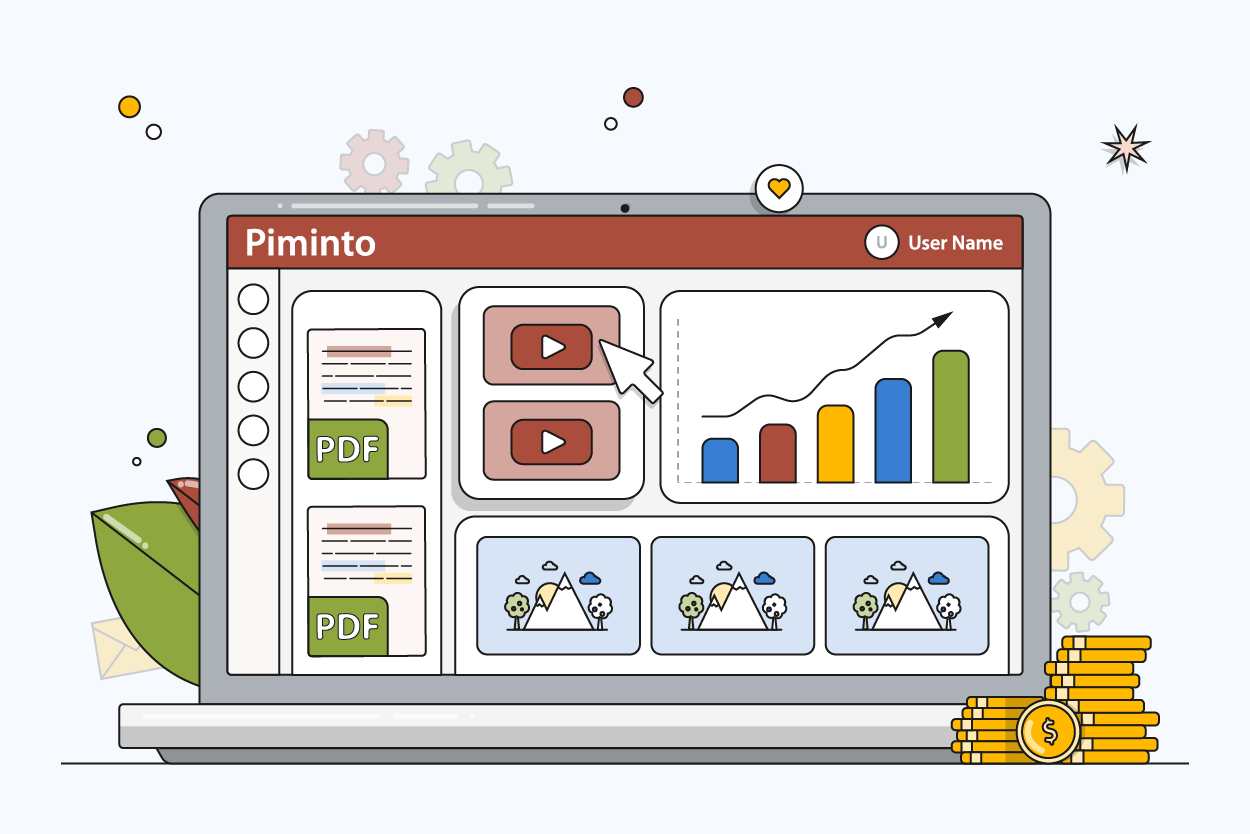
In simple terms, PIM works by managing data. With product information management, you can gather, centralize, enrich, and distribute data related to the products that you sell. This functionality supports any type of information, from banners and reviews to pricing and product descriptions.PIMinto lets you effectively track and process the following data:
- Basic data: Universal product codes, article numbers, titles, etc.
- Assets: Images and video files that help clients understand what exactly they are buying.
- Technical information: Product’s size, color, length, volume, material, etc.
- Marketing information: Major keywords, descriptions, Google categories, etc.
- Sales information: Store pricing data, latest reviews, and testimonials that can be used for promotion.
- Localized information: Information tailored to the region you operate in. It could be regional currency system data.
- Design information: Information about how the product is displayed and how it fits with your business's branding.
- Taxonomy: Variations of the catalogs, connections between them, and core categories for the company’s structure.
- SaaS PIM: Software is created and maintained by a third-party provider (like PIMinto), which means you can’t change the code. Such software requires a license or subscription payment to use. However, it saves you from needing a development team.
- Open-source PIM: In contrast to SaaS PIM software, you have full access to the code. So, you can add new features and change any existing options.
PIM vs ERP vs MDM: Which System Do You Need?
Many businesses struggle to understand the difference between PIM, ERP, and MDM systems. Get clarity on which solution fits your needs.

What does PIM Stand For?
Product information management (PIM) is generally a subcategory of master data management (MDM). It offers great scalability and can be integrated with any legacy software through flexible APIs, making it the go-to solution.| Aspect | Definition |
|---|---|
| Definition | Centralized management of product data for accuracy and consistency across channels. |
| Purpose | To ensure accurate, consistent, and up-to-date product information across multiple platforms. |
| Key features | Centralized Database, Data Quality Management, Multi-Channel Publishing, Digital Asset Management, Workflow Management, Integration Capabilities, Localization and Translation |
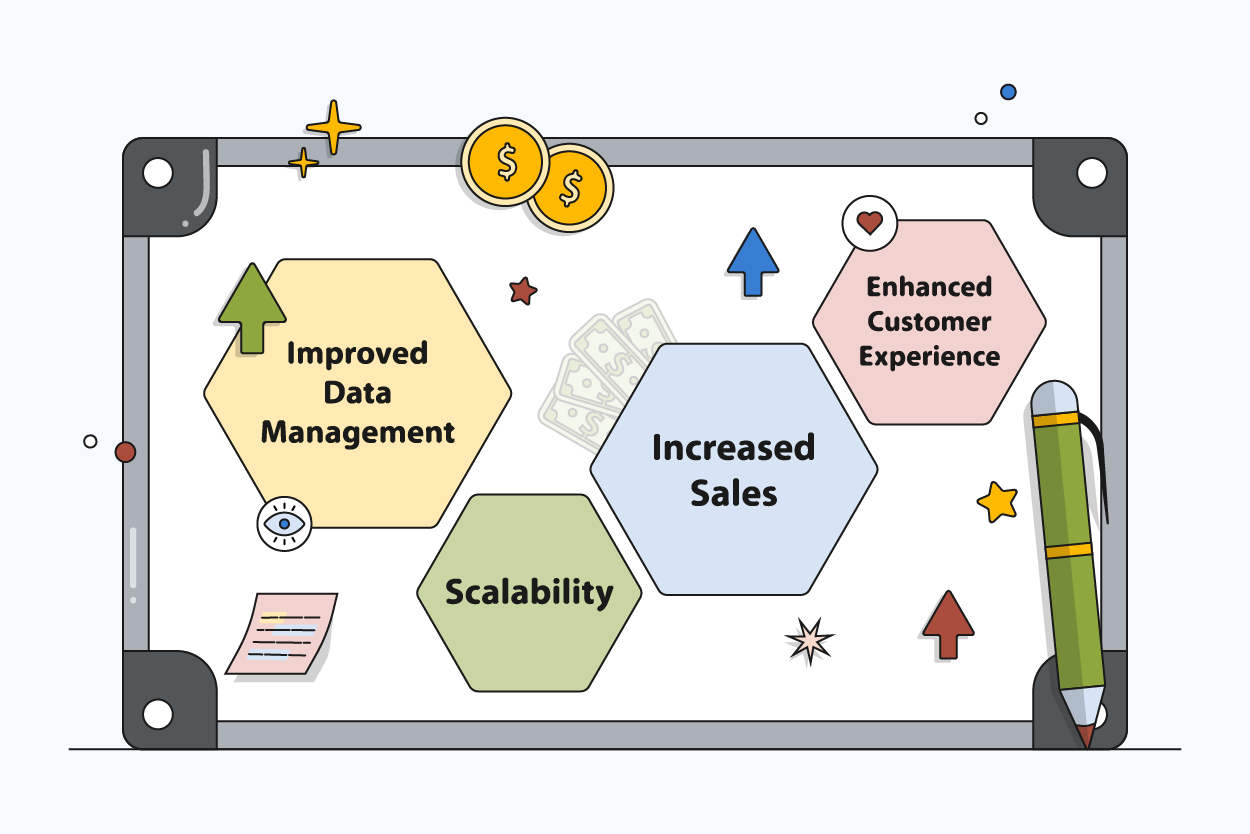
| Benefits | Improved Data Accuracy, Enhanced Efficiency, Better Customer Experience, Faster Time-to-Market, Increased Sales, Compliance and Risk Management |
What Is the Function of PIM?
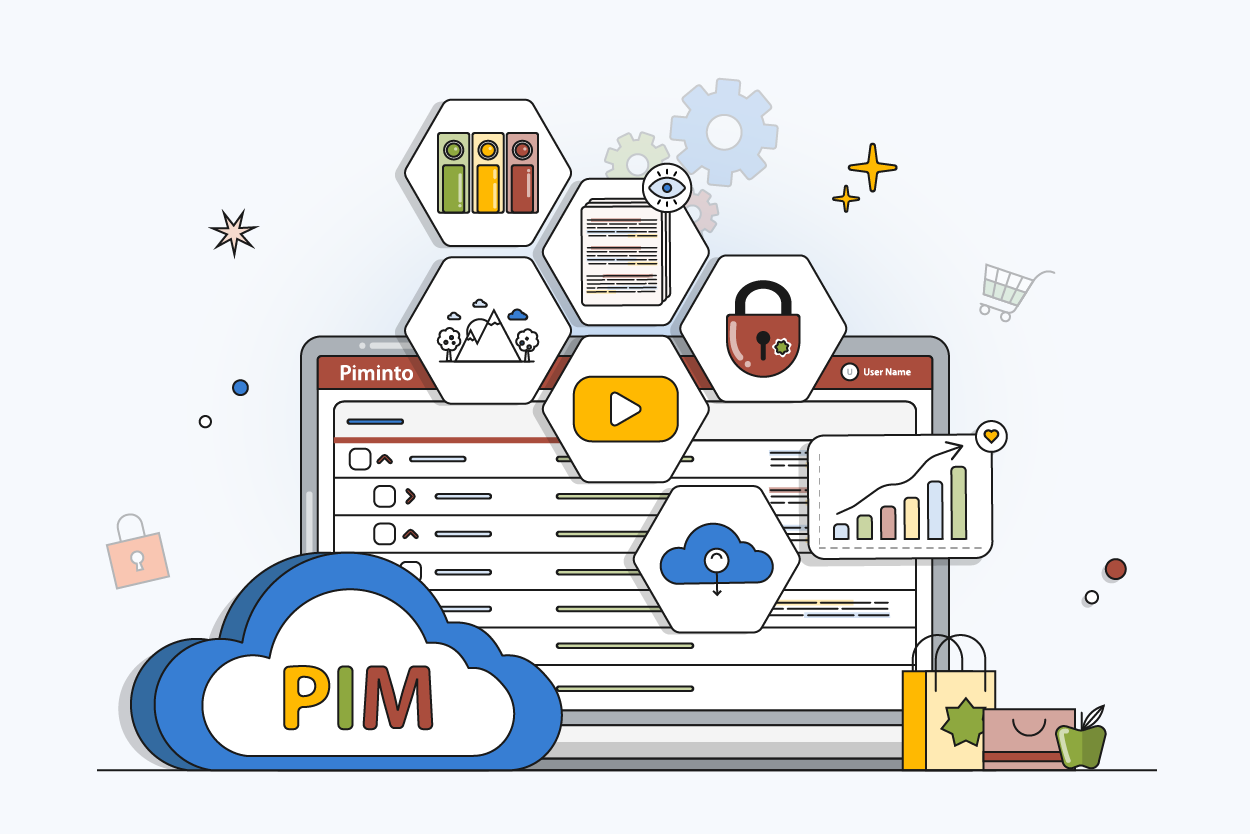
As a database application, PIMinto’s PIM has these core functions:

Data Collection
Import, map, and transform through the selected channel.

Consolidate and Rationalize Data
Organize and simplify product information for consistency across all platforms.

Enrich Descriptions
Add clear, engaging product details to boost appeal and accuracy.
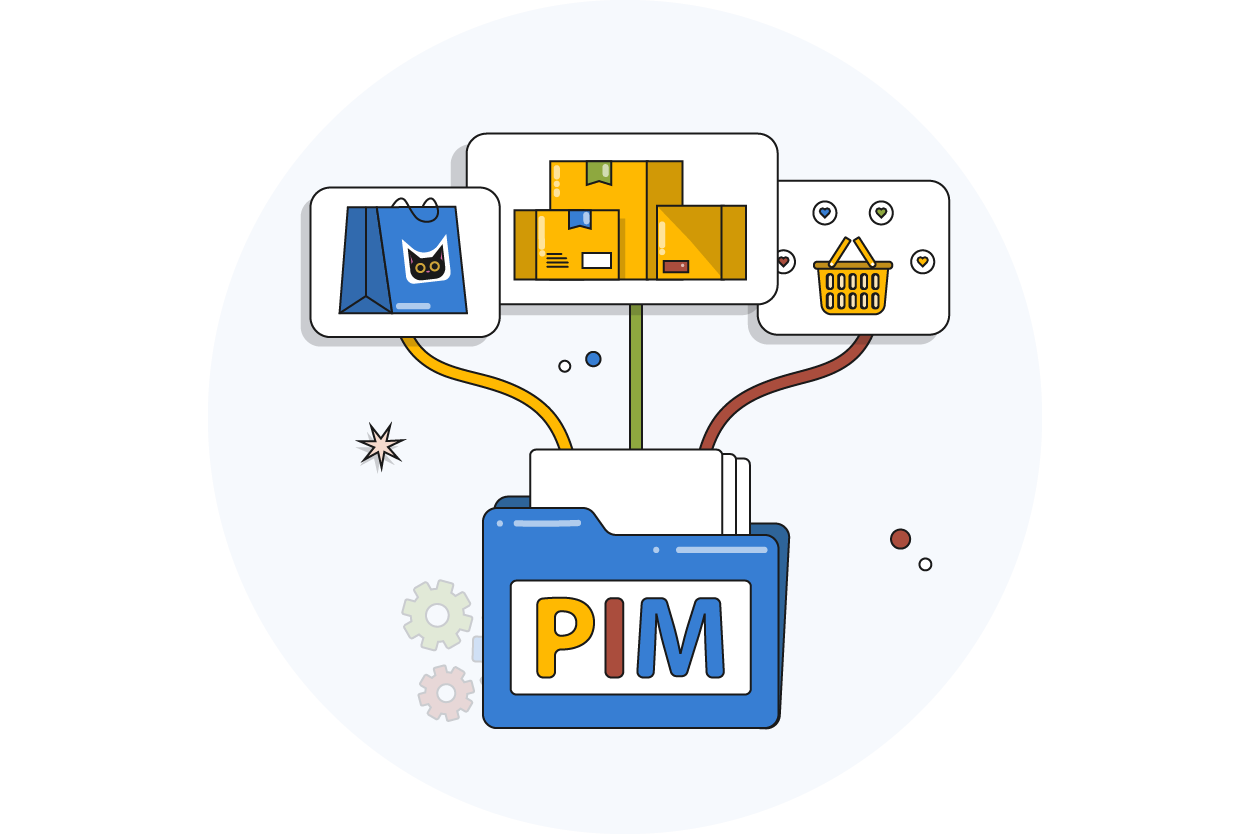
Disseminate Data
Sync product data across channels in real time with a robust API.
Key PIM Features
Besides these key functions, here are additional capabilities of PIMInto product information management systems.

PIM software supports unlimited product channels, allowing users to store and present the same product information in different formats, including multiple languages. This is essential when you work in multinational teams and share your products around the world.
Brand portals help growing companies manage and share product information efficiently. They provide a centralized platform where businesses can distribute accurate product data, images, and marketing materials to retailers and partners. This simplifies eCommerce setup and ensures consistency across sales channels without requiring a large budget.
A PIM system offers multiple views to help users manage product data efficiently. These views allow teams to organize, edit, and analyze product information in ways that best suit their workflow.
Product categories help structure and organize product data. They make it easier for different teams to access relevant information. Marketing teams, IT specialists, and other departments can quickly find the data they need without sifting through unrelated details.
With PIM solutions, you can see several versions of one product. This option allows you to share common characteristics (size, material, colors, season, etc.). You can easily switch between versions to display different variants and product attributes.
With product information management, you can build connections by making different types of associations (for example, recommended products). When you work with product data, relationships will help you see items with similar characteristics, descriptions, or other matches.
Product data often comes in complex formats such as markup text, pre-defined fields, and multi-dimensional pivot tables. PIM systems can transform this data into a structured, standardized format that is easier to manage and distribute.
Who Uses PIM?
Depending on your company's organizational structure, PIM may be used by different departments. While it benefits the entire company, let’s look at the core roles that rely on PIM.
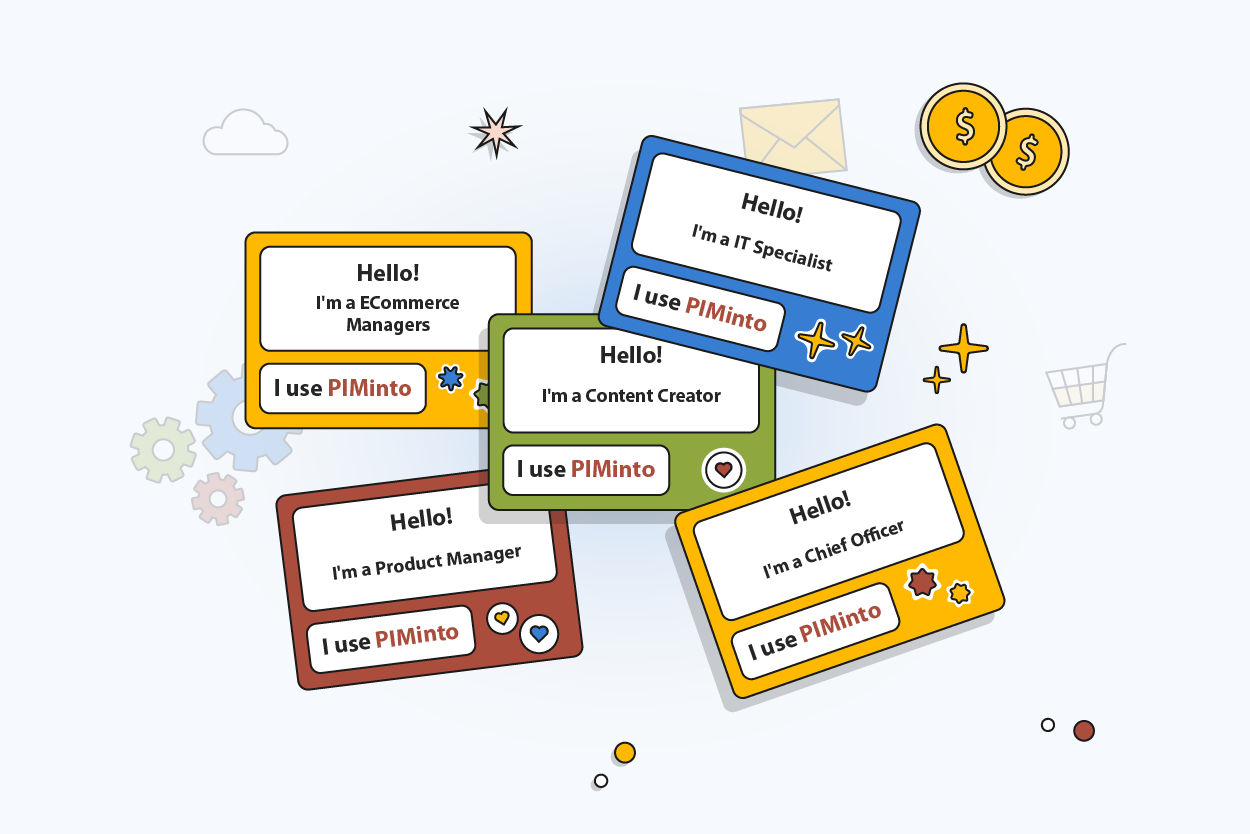
ECommerce managers use PIM to send accurate product listings to syndication platforms without the need for manual verification. Since PIM solutions offer auto-check features, they deliver a superior customer experience without spending much time.
Content writers, photographers, designers, search engine optimization specialists extract product details from the PIM system. Since data is well-structured, individuals don’t need to waste time searching for it.
Product managers rely on PIM to maintain accurate product information throughout its lifecycle. When data changes, PIM automatically updates it across all channels, eliminating the need for manual communication with the marketing team.
PIM simplifies the IT department's work by automating routine tasks, allowing focus for higher-priority operations. Additionally, data is regularly backed up, creating safe and reliable management of product information.
Today, digital presence is an essential component of any business. Regardless of what you do (distribute, sell, or manufacture), you have to maximize your presence on all related platforms while maintaining the quality of product data and digital assets. This is where PIM solutions are invaluable.
Ready to Choose a PIM System?
With so many PIM solutions available, selecting the right one can be overwhelming. Our comprehensive guide breaks down the 15 most critical criteria to evaluate.
Why Is PIM Needed?
PIM simplifies product data management, reducing manual tasks and preventing data inconsistencies. This allows teams to focus on higher-value activities, improving efficiency and reducing stress.

Constantly monitoring and managing product data can overwhelm employees. If teams spend hours on manual updates, it signals a breakdown in data management. As the number of products grows, even experienced specialists may struggle to keep up. Implementing a PIM system prevents this issue by automating processes and ensuring smooth operations.
Data accuracy directly impacts decision-making processes. If something is wrong with the information (for example, it was not updated on time), it may lead to poor decisions. Data analytics must receive only accurate data, and the best way to do it is to implement PIM solutions.
Changes like size updates or other adjustments need to be made quickly to maintain accuracy. Inconsistent information can lead to order cancellations when customers notice discrepancies between descriptions and visuals. Consider using PIM for frequent updates.
Automating product data management speeds up the entire process of launching new products. With a PIM system, updates, approvals, and distribution happen faster, reducing time-to-market with less effort. Even when following strict requirements, preparation becomes more efficient. Faster operations lead to quicker sales and increased revenue potential.
PIM solutions automate workflows and improve the performance of the whole organization. When you remove repeatable tasks and reorganize your processes, you should expect an increase in ROI.
Is Your Business Ready for PIM?
Take our 2-minute assessment and get personalized recommendations
-
Analyze your current product data challenges
Get instant recommendations based on your business profile
See which PIMinto plan fits your needs
Learn if PIM will solve your specific problems
Benefits of a PIM Solution
PIM systems simplify the management of product data. This leads to savings in both time and money while reducing the effort spent maintaining accurate, up-to-date information.
PIM can save companies considerable sums. With good information management, you also avoid excess effort, reducing the time needed to complete tasks. Everything is stored in one place, so any specialist can find data in seconds.
Product information management gives you powerful tools to edit, organize, and optimize data in catalogs of any size. If you are worrying about handling information from multiple sources, leave it to PIM to simplify the process.
When working with data, you must share it with retailers, partners, sales specialists, and other recipients. PIM technology makes it easier to share everything, thanks to quick data exports. The information on catalogs and sales channels can be updated automatically.
You need a strong presence wherever customers are shopping. However, each channel has its own rules and requirements, making manual updates time-consuming and error-prone. PIM simplifies this process by automating data management and meeting compliance standards for each platform. It also allows businesses to easily adjust product information as needed to create a great shopping experience for customers.
Successful marketing campaigns depend on well-organized and accurate product information. PIM enables businesses to go beyond basic selling by supporting upselling and cross-selling strategies. Moreover, modern PIM tools allow you to change the design of the catalogs and sales, making your marketing campaigns more effective.

Real PIM Use Case
Hussmann Corporation

Hussmann Corporation, a subsidiary of Panasonic Corporation engages in millions of dollars of online replacement part sales annually. Hussmann wanted to extend their product line data to contain competitor compatibility information as well as filterable product category specific parts attribute data that could be used to enrich the end consumer experience.
PIMinto PIM was selected to provide the functionality required by Hussmann. All functionality required by Hussmann is supported by PIMinto as standard features.
- Initial product data was imported from spreadsheet into PIMinto.
- PIMInto Feeds were configured to fetch new products / SKU’s nightly from available external business system API’s and add them to the PIM along with available attribute data.
- New products / SKU’s are added to the PIM accordingly. Existing SKU attributes are updated accordingly.
- Headless eCommerce solution extended to utilize PIMINTO fast data serving API’s to deliver product data to eCommerce channel in real time.
- Automated and manual Product and SKU data exports configured for automated and manual channel exports.
By implementing PIMinto PIM, Hussmann Corporation effectively extended their product line data, improved data management, and enhanced the customer experience.
Vermeer Corporation

Vermeer Corporation, founded in 1948 is a manufacturer of industrial and agricultural equipment. Vermeer wanted to expand their eCommerce reach to include retail customer online order placement using a unified platform. Additionally they wanted to provide order fulfillment and order pickup through their dealer network. Meeting this goal would require that a single source of Parts Information was utilized by Vermeer and it all 150 participating dealers and that this single source of truth not only contains “global” master parts data but also contains parts information for each part specific to each of the 150 dealers. This dealer specific parts data should only be editable by each individual dealer and served by the eCommerce solution for the specific dealer that was selected for order fulfillment.
- Initial Product data was loaded by Vermeer from spreadsheets and API connections.
- Dealer access keys were generated for each participating dealer.
- Access keys are used by each dealer to maintain their parts specific data in the editing user interface and through the PIMInto API. API Keys only grant editing access to specific fields defined for each dealers. Master parts data is read only and not editable by the dealer.
- Vermeer’s headless retail eCommerce solution is connected to PIMInto PIM and automatically utilizes the dealer specific parts data for the dealer fulfilling the order. By utilizing the standard “View” functionality from PIMinto PIM and the API, the eCommerce solution always has the correct parts data.
- PArts data can be updated using the visual user interface of utilizing the API for leveraging automation.
- By leveraging the PIM, all 150 dealers utilize the same PIM API for parts related data and integration with the retail eCommerce solution. This eliminates the need for creating unique connections to different dealaer business systems and eliminates any custom integration code.
By implementing this solution, Vermeer Corporation successfully expanded their eCommerce reach and streamlined parts data management across their dealer network.
RBI Corporation

RBI Corporation, a distributor with over 250,000 SKU’s and multiple sales channels needed a single source of truth that could be used to drive truly headless eCommerce web sites across multiple sales channels. Each sales channels was limited to various product lines and SKU subsets. RBI corporation’s product data would need to be maintained using automated loads from business systems, and be able to import product fitment and attribute data provided by its suppliers, as well as allow manual editing from the PIM user interface. PIMInto was selected due to its standard features, API speed and functionality.
- PIMInto was configured to import data from external business system on a scheduled basis. New SKU’s are automatically added to the product dataset. Existing SKU’s attribute subsets are automatically updated when modified in the external business system.
- RBI data management staff consistently utilizes the PIM User interface to enrich product data.
- RBI utlizes the PIM “View” feature to visually map to import files provided by its suppliers to import and update SKU specific attribute data.
- RBI’s retail and wholesale eCommerce sites were integrated with PIMInto API to allow real time data integration.
By implementing PIMinto PIM and integrating with their eCommerce sales channels RBI Corporation effectively leveraged their product data across multiple sales channels leveraging multiple data enrichment paths and providing an enhanced customer experience.
Comparing PIM to Other Data Management Tools
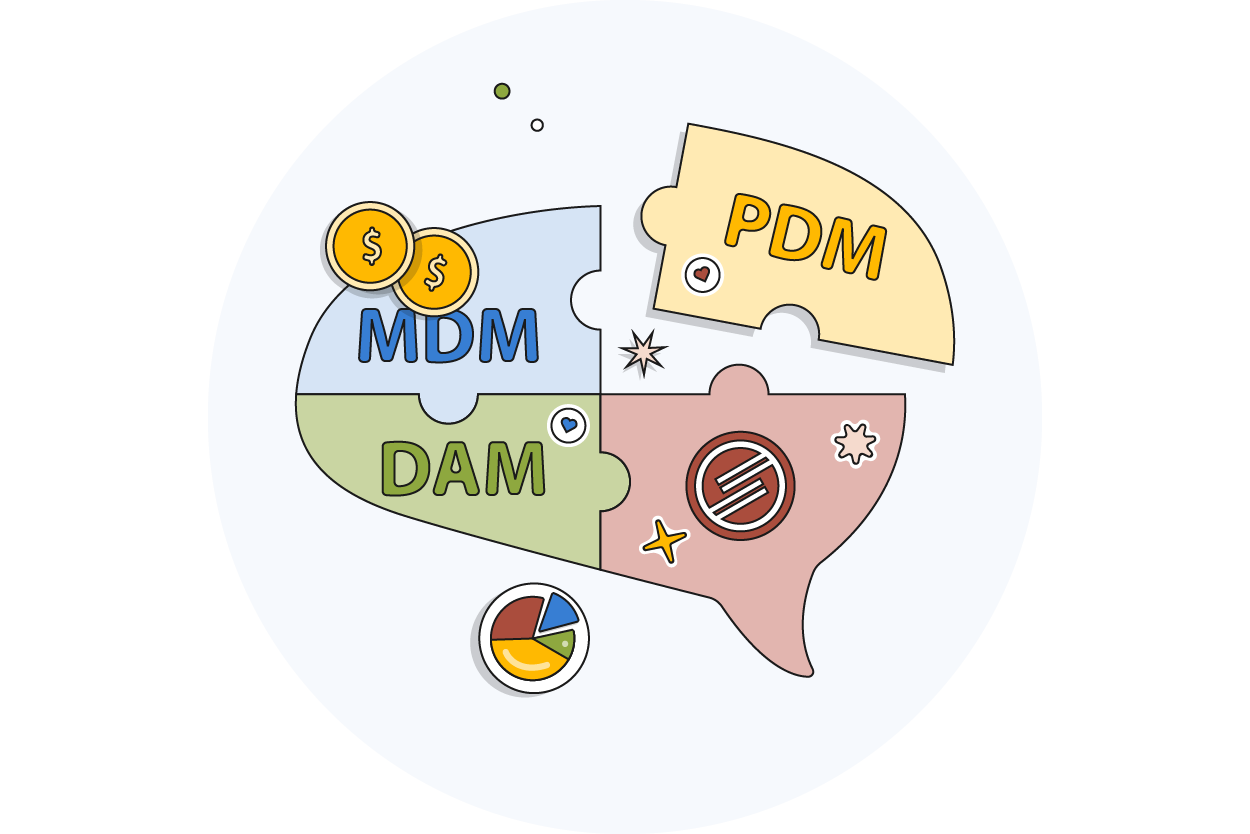
PIM is typically compared with other systems for managing data like Product Data Management (PDM), Master Data Management (MDM), and Digital Asset Management (DAM). While these applications are related, they perform distinct roles in managing and organizing business data.
PDM
PDM is used primarily in manufacturing and engineering for product design data, specifications, and managing the product lifecycle.

MDM
MDM is typically an enterprise system that manages and standardizes all the most important business information, including customer, supplier, and financial data.

DAM
DAM systems manage digital assets like images, videos, and brand assets.
PIM is a subset of MDM and is employed to optimize and syndicate product data. While PIM integrates with DAM to link media files to product data, DAM lacks the product data management and syndication capabilities of PIM. All these systems play a role in data governance, but PIM targets specifically centralizing, enriching, and distributing product data effectively to marketing and sales channels.
The Role of PIM in Multichannel Strategies
A well-implemented PIM system is essential for businesses that sell their products through multiple sales channels, including eCommerce websites, marketplaces, social media, and physical stores. No matter what channels users engage with your business, PIM assists in delivering a consistent shopping experience by keeping product information synchronized. One product database ensures that valid and updated data is displayed on every sales channel. Plus, PIM lets you customize data for each channel’s specifications.
PIM Implementation Steps and Technical Requirements
A successful PIM implementation starts with clearly defined business objectives and analysis of current issues like fragmented data, inconsistencies, or inefficient updates. Companies migrating from spreadsheets, legacy ERPs, or bespoke databases need to clean and normalize data before migrating to prevent mistakes. Real-time integration with eCommerce platforms, ERP, and DAM systems facilitates efficient synchronization of data.
User adoption is essential to maximizing the advantages of PIM. Product data, marketing, and eCommerce teams need training in new workflows, while IT teams are responsible for system administration and API configurations. A structured onboarding process enables efficient use of PIM, improving data accuracy and overall value.
When is the Right Time to Invest in a PIM System
There is no wrong time to invest in PIM solutions. In most cases, clients understand that the time to invest in PIM is when multiple issues arise. For example, customers start making order returns due to incorrect information, or sales conversions fall due to poor product data enrichment. When this happens, it means you have to change the approach to managing your data and implement a new strategy.
How to Choose a PIM system?
To choose a good product information management system, you need to understand who will be using it, how many users will work with the tool, and what skills they possess. Depending on how skillful your colleagues are, you’ll have to set training sessions and practice. This will help you build confidence and overcome any challenges. With the right support, PIM can be successfully integrated into your workflow to improve product data management.
Try the Really Fast PIM from PIMinto
Start with our free plan to experience all the benefits of PIMinto.
Blogs & Views
-

Best PIM Software for Shopify in 2026
Best PIM Software for Shopify in 2026 Best PIM Software for Shopify in 2026 Your Shopify catalog is a mess. Not because you're doing anything wrong , it's just what happens when you're juggling product data a...

-

Product Descriptions Optimization: 7 Proven Strategies for eCommerce Success
Every word on your product page matters. The right description attracts search traffic, builds trust, and drives sales. Whether you sell on Amazon or your own website, optimized product descriptions act as sales tools that work around the clock to co...
-

15 Challenges for eCommerce in 2025
Running an online store in 2025 is exciting and stressful. Ecommerce has evolved to be one of the leading industries globally, but the path to success is filled with challenges. From supply chain insecurity to swelling customer expectations, ecommerc...
-
The Complete Guide to PIM for Retail: Transform Your Product Management
Product data drives retail. Every product in your inventory has names, prices, specs, images, videos, and more. Multiply that out across hundreds or thousands of SKUs, spread across multiple channels, and the task of keeping it all current becomes da...