Top 8 Best Practices Product Information Management
Author name: Maksym Bilokon

Managing product information across multiple channels, teams, and systems is complex. Inconsistent data, manual updates, and disconnected workflows slow down time-to-market and reduce operational efficiency.
Implementing Product Information Management (PIM) best practices solves these challenges. Companies that follow proven PIM strategies see faster product launches, improved data quality, and streamlined collaboration across departments.
This guide covers 8 essential PIM best practices based on real-world implementations. You'll learn how to structure your data, select the right software, and optimize workflows for maximum efficiency.
How Do You Define Product Information Management?
Product information management is a data-handling method brands, businesses, manufacturers, and wholesalers use to sell products. PIM becomes effective when collecting, optimizing, and distributing the information among the platforms. Such an approach is used to improve product data quality and speed up time-to-market.
Why Your Business Needs PIM in 2025
Discover the 7 compelling reasons why companies are implementing PIM systems to streamline product data management and boost efficiency.
Advantages of Using PIM in Business
Product information management was designed for effective data storage and usage. By using this practice, you can effectively work with the following types of data:
- Specs and technical data of the product.
- Product usage data. Description, a detailed explanation of how and where to use it, and the samples.
- Product-related digital assets (videos, images, catalogs, files, etc.). An essential part of PIM for distributors.
- Languages. Multi-country and multi-region companies need to create effective marketing strategies and expand their reach. You can also unlock the automotive translation so the clients will always see the information in their preferred language.
- Value-added asset. Presenting all the product details to customers is crucial to helping them visualize what they are buying.
- Point of sale. Storing information about store points is essential for businesses with such points, so it gets much more accessible to centralize the data and evaluate the performance of the products in specific places.
The number of cases where you can use product information management is enormous. Below, we reveal the most essential arguments for using PIM for your business.
- Quick launch. Every business that pretends to be effective should be launched soon. Using PIM is the best method to shorten the time to market. As soon as you prepare all the information, you can start selling.
- Strong brand presence. The fact that clients can quickly identify the needed items and buy them by using different channels increases brand awareness so that more people will recognize them.
- Fast catalog preparation. Product information management allows you to minimize time searching for needed data and focus on improving product descriptions. You will provide more valuable information about the product, so the clients will be more confident when choosing.
Another advantage of implementing PIM is optimizing your product data management. The more your business grows, the better product range you have. Overall, there are 15 reasons why implementing product information management is advantageous.
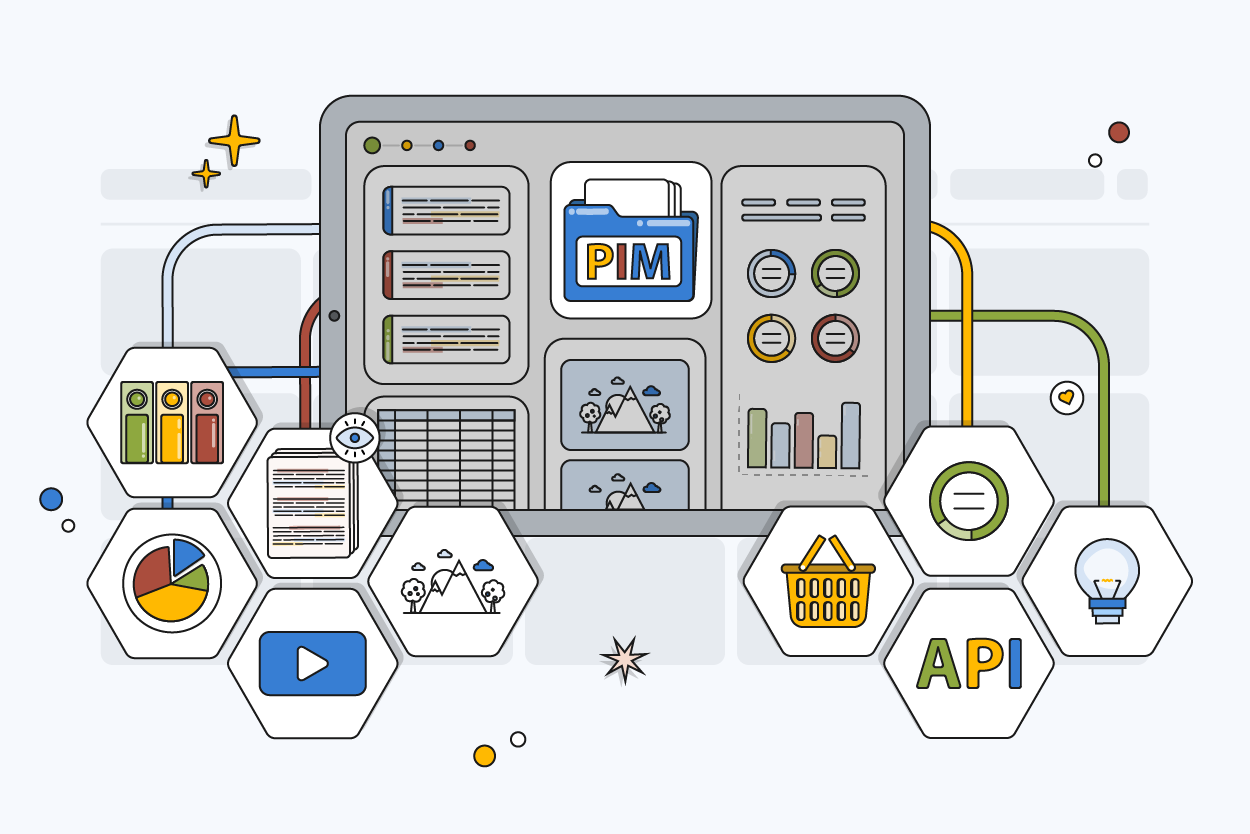
Product information management helps to control the data inside your company effectively
Disadvantages of PIM Implementation
While PIM offers significant benefits, it's important to understand potential limitations. PIM systems require initial setup time and ongoing data maintenance. For companies with highly dynamic product catalogs or those needing advanced digital asset management, combining PIM with complementary tools like DAM (Digital Asset Management) or PXM (Product Experience Management) may be necessary.
How to Implement Product Information Management?
The way you implement product information management differs, as several factors may change the approach and strategy. Business vertical, the company’s background, history, and other factors matter. Still, there is a general implementation plan. It includes the most critical steps and explains how to work with data during the implementation. Let’s review the product information management requirements and see how they’ll help you increase efficiency.
- Design and discovery. During the initial stage, you will have several workshops and meetings with stakeholders to understand how data flows through the system.
- System orientation and data modeling. A general overview of PIM’s features and functionality. You must also define the product data and understand its structure and format. This information is essential when building the PIM architecture.
- Configuration and migration. You import data on the platform once you create the structure and set up the database. This process could be manual or automated.
- Product information management integration. Information synchronizes between different systems when integrating other business systems and tools.
To ensure the integration goes well, you can test it with a small group of people. Ask your co-workers to use PIM. This will be good training for admins and a data workflow test opportunity.
Is Your Business Ready for PIM?
Take our 2-minute assessment and get personalized recommendations
- Analyze your current product data challengesGet instant recommendations based on your business profileSee which PIMinto plan fits your needsLearn if PIM will solve your specific problems
Product Information Management Best Practices
When we know about the pros and cons and how to implement it, it's time to talk about PIM's best practices. These practices will significantly boost your workflow and eliminate common issues that slow down the process. With the described practices, you can collect and store data, directly impacting your efficiency.
Select Roles and Define Responsibilities
The business works as a mechanism to strive for set goals and achieve better results. You may need several roles, depending on the model of your business. It could be a marketing department, specialists responsible for brand collaboration, or e-commerce managers. Create a multi-role system where everyone has a needed access level so people will know the processes and tasks they are responsible for. To make it work, consider implementing Bluestone product information management when specialists only access areas they need to complete their assignments. Also, you can keep a history of all pim use cases in your team so you can analyze it and increase efficiency.
Choose the most effective PIM Software
It may sound scary, primarily if you work with product information management for the first time, but there’s nothing to worry about. When choosing, ensure the selected product has all the points from the checklist below.
- High productivity and the ability to process vast amounts of data.
- Cloud-based with high security and simple access.
- Ability to coordinate with other data-management software.
- An option to manage digital assets.
Get Rid of Unnecessary Product Information
Cleaning the database, eliminating unnecessary information, and updating it are essential if you want to succeed with your product. How does it work? For example, you have images that don’t match or represent your products correctly. In this case, you remove old photos and find new ones to replace them.
Another example of this practice is when you need to refresh information. Suppose the product is replaced with a similar one that has different requirements. In that case, you need to create a new description to give customers a detailed description of the product, its composition, its characteristics, etc.
The purpose of removing unnecessary information from the product description is to ensure you run your business using only reliable data. Moreover, constantly refreshing the database ensures your customers receive only verified data about goods and services. It’s not a one-time task. It should be done regularly, and that’s where product information management helps you keep the database updated.
Store Data in a Single System
It’s not a secret that most companies use several systems to store data. Someone may think it’s a good signal, but it’s not. When people use too many incompatible systems, they don’t have the desired effect. Transporting the data between the systems gets complicated, creating delays and preventing teams from accomplishing their tasks.
With a single system, your data will be centralized and easily accessible, so you won’t have trouble finding something. When we look at PIM examples like Plytrix or Sales Layer, we understand they are easy to use, effective, and reliable. They include a single data processing system, making them so effective.
Set Product Information Enrichment as One of the Main Goals
You must surpass your competitors in order to have more sales, increase your income, and stay on top of your niche. To achieve this, you need to boost your product information. How to achieve that? Update and optimize your product descriptions, find better images, and add videos to the product cards. When people have more information about something they want to buy, making the right choice is much easier. Moreover, you can specify your descriptions to reach a broader market and increase your income.
Invest in Creating Engaging Catalog
The catalog is a core component of effective information management. When it’s completed and organized, clients see the detailed description of each product, so the selection process becomes much more manageable. To ensure you create an informative catalog, ensure it has the following:
- Alternative products suggestions.
- Product attributes and product categories.
- Solid product descriptions with images and videos.
- Specific attributes related to different channels.
Clarify your Requirements and Plans for Implementation
Whether you will change how you perform your product management, ensure you build a strong business case and know where to find resources for it. Consider calculating a budget to switch between the methods and create a plan to understand how your funds will be spent. To ensure you didn’t miss anything, follow these requirements:
- Offer bulk editing.
- Enable true collaboration.
- Launch powerful Digital Asset Management.
- Launch everything in the cloud.
- Use machine learning and artificial intelligence.
Choosing the Right PIM System?
Compare top PIM solutions for 2025. Our comprehensive guide covers 15 critical criteria to help you select the perfect system for your business needs.
Enhance the Product Performance
Having clients occasionally is OK, but what about regular customers? These people repeatedly come to you to purchase your products and enjoy high-quality products. To make it happen, you should have proper product information management as it will bring you more traffic and increase sales. To ensure it will happen, do the following:
- Focus on improving search engine optimization (SEO).
- Monitor product performance on multiple platforms to know when to implement changes.
- Analyze the market before planning the information about the product.
- Customize the product information depending on the target sales channel.
How To Choose The Best PIM Software for Business
Selecting the Product Information Management that will fit your needs and requirements may be challenging. The main issue is that you have to consider multiple factors when making a choice. First, it’s about people who will work with this system. You should know their skills, knowledge, and understanding of the basic requirements. Second, your data management needs. Factors like flexibility and reconfigurability are essential if you decide to use data from different sources.
The next factor is your challenges identification. For example, some systems are equipped with a multi-language support system, which is extremely important when customers come from different cultures and nationalities. Last but not least - maintenance. You should get a scalable product information management system. This decision may seem questionable because of the cost, but if you launch a long-term project, it will be advantageous. You won’t need to pay extra to add new users.
Consider your integration capabilities when choosing PIM software. It should easily integrate into your e-commerce platform or EPR system (depending on what you use). The better integration capabilities you’ll have, the fewer disruptions you’ll have during work time. Also, pay attention to data security. Choose a trustworthy company that’ll help you integrate product information management. Since you’ll work with sensitive product data it’s up to you to select the system with multi-level security protocols to avoid data leakage. With such approach, you will effectively organize all the processes and keep your product data protected.
Ready to Implement PIM Best Practices?
See how PIMinto helps businesses streamline product information management with industry-leading features and expert support.
Modified on: 2024-03-05
Blogs you might like
-

Best PIM Software for Shopify in 2026
Best PIM Software for Shopify in 2026 Best PIM Software for Shopify in 2026 Your Shopify catalog is a mess. Not because you're doing anything wrong , it's just what happens when you're juggling product data a...

-

Product Descriptions Optimization: 7 Proven Strategies for eCommerce Success
Every word on your product page matters. The right description attracts search traffic, builds trust, and drives sales. Whether you sell on Amazon or your own website, optimized product descriptions act as sales tools that work around the clock to co...
-

15 Challenges for eCommerce in 2025
Running an online store in 2025 is exciting and stressful. Ecommerce has evolved to be one of the leading industries globally, but the path to success is filled with challenges. From supply chain insecurity to swelling customer expectations, ecommerc...
-
The Complete Guide to PIM for Retail: Transform Your Product Management
Product data drives retail. Every product in your inventory has names, prices, specs, images, videos, and more. Multiply that out across hundreds or thousands of SKUs, spread across multiple channels, and the task of keeping it all current becomes da...